
After the Bezos-Sponsored "Tech Gala," What's Next?
ChatGPT and Claude's swanky influencer dinners, Palantir's sold-out chore coat, and a new meme genre might give us a clue.

Good morning, everyone! I am sending this from St. Martin, where I just landed with some ladies you know and love (more on that later). I’m very much looking forward to a couple of days working in the sun, and alternating between the pool and the beach for swim breaks.
Last week felt particularly long, probably because the first Monday in May was a doozy: The Met Gala came and went without much fanfare, but the overarching narrative this year is that the pop cultural tentpole has devolved into the “Tech Gala,” a party for billionaires like honorary co-chairs Jeff Bezos and Lauren Sánchez Bezos to flex their wealth and (purchased) proximity to gatekeepers in the worlds of fashion and art. This level of social climbing does not come cheap; the Bezoses reportedly donated $10M to the Costume Institute in exchange for their participation in the elite event.
Mrs. Sánchez Besos, who sat front row at the Schiaparelli Couture show in Paris in January, walked the carpet alongside Nicole Kidman and Anna Wintour wearing an underwhelming navy gown by the French house — an objectively safe, boring showing for someone who paid eight figures to secure an invitation. Other tech titans in attendance include, but are not limited to: Meta CEO Mark Zuckerberg and his wife, Priscilla Chan; CEO of Instagram and Threads, Adam Mosseri; Google co-founder Sergey Brin; TikTok CEO Shou Zi Chew; and Snap Inc. CEO Evan Spiegel and his wife, Miranda Kerr, who was dressed in Dior by Jonathan Anderson. OpenAI, Amazon, Snap, Meta, Amazon, and ShopMy — the affiliate shopping platform that achieved a $1.5B valuation last year — all purchased tables, which cost a reported $100,000 each.
As expected, this vibe shift caused several notable names to skip the Met Gala altogether this year. Counterprogramming popped up in protest, including a runway show called the “Ball without Billionaires” featuring a cast of Amazon workers wearing looks by indie designers, co-hosted by Gabriella Karefa-Johnson. Though it is customary for the mayor to attend, Zohran Mamdani did not; instead, he used his platform to spotlight local fashion industry professionals in a series of portraits by Kara McCurdy.
We all know that the fashion industry — fashion media in particular — has fallen on hard times. Even storied luxury conglomerates can’t compete with their tech counterparts in terms of growth and earning potential. It’s not exactly shocking that the tech bros have swooped in to assert their dominance by writing some massive checks, especially because they’re so desperate to be cool (or at the very least, adjacent to it), one of the few things that can’t be bought. Now that this year’s Met Gala is behind us, and Big Tech’s infiltration of fashion appears to be the new normal, I’m curious to see how quickly we’ll see various companies attempt to make themselves more palatable to young audiences in an attempt to reach a trend conscious consumer base with good taste — and, in many cases, a good moral compass.


For starters, both Claude and ChatGPT have hosted dinners for creators at trendy, hard to get into establishments in both New York and Los Angeles over the past few weeks. From Instagram photos and TikTok videos, these were indistinguishable from the dinners that influencers regularly attend as part of their jobs, usually put on by fashion and beauty brands, produced with incredible, wedding-level attention to detail. The Claude supper club was held at Wild Cherry, the restaurant inside the A24-owned Cherry Lane Theater, while the ChatGPT dinner, hosted by content creator (and Jake Shane bestie) Brett Chody, was at the Little Beach House in Malibu — a Soho House location that’s notoriously exclusive and a home base for celebrities. Anyone quickly scrolling through their favorite influencer’s Stories might have not even clocked that the chic tablescapes at the clouty restaurants were brought to you by Anthropic and OpenAI.
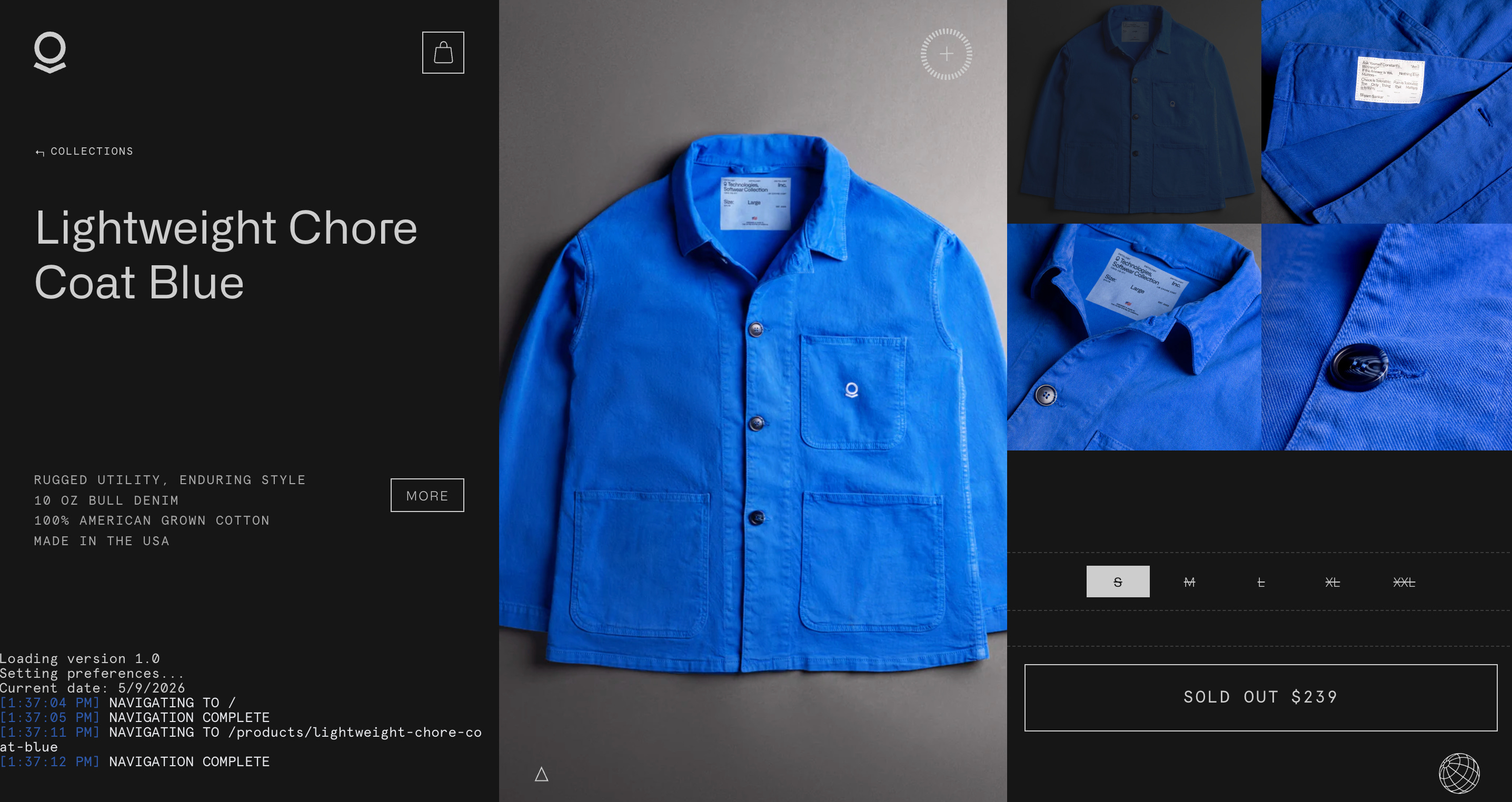
Something similar happened this spring, when a blue chore coat made by Palantir went viral and subsequently sold out, even earning a story in The New York Times. This is just the latest in a long line of tech companies entering the merch game — a Korean streetwear label even licensed the Lockheed Martin brand name to slap on an on-trend gorpcore collection a couple of years ago — but the chore coat in particular is catnip for a certain type of menswear enthusiast. Though it’s likely that some people who purchased the jacket did so ironically, others surely just thought it looked cool. It’s a great example of what NEMESIS is calling “tasteslop,” or things that have signifiers of “good taste” or design, but are completely devoid of the human element, and the “socially validated relation between objects, people, histories, scenes, and timing. Tasteslop emerges when the visible signs of taste are extracted from those relations and redeployed generically.“
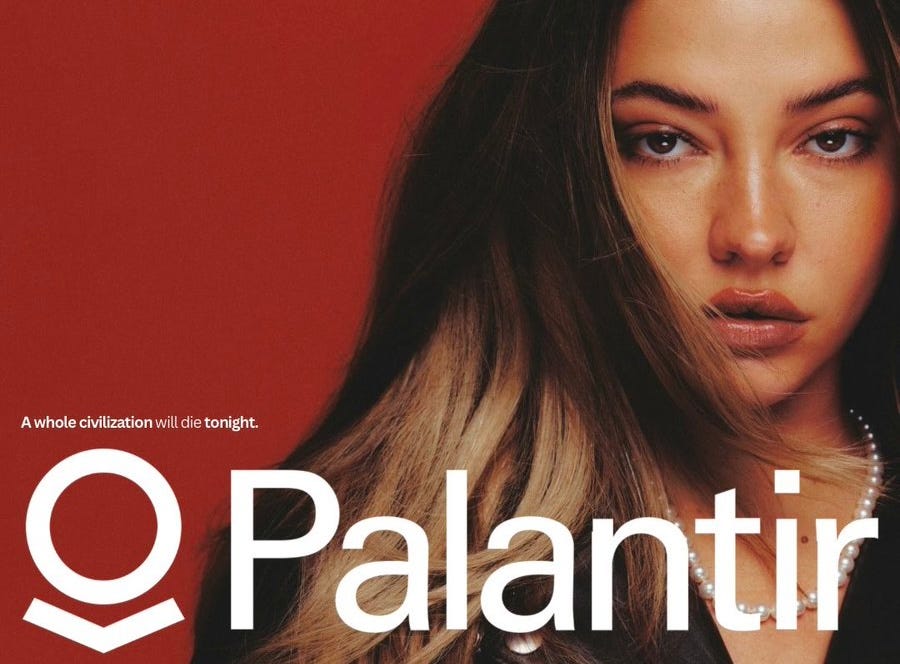
The chore coat selling out is just the first step in Palantir’s quest for cultural capital in the fashion space in particular. This is why a parody account on X called PalantirGirls stopped me in my tracks when it came across my timeline a couple of weeks ago. Their feed is a scroll of fake Palantir ads in the style of Los Angeles Apparel, featuring influential Gen Z “It” girls like Madelyn Cline, Olivia Rodrigo, Gracie Abrams, and Addison Rae with dystopian slogans like “make America great again,” “wealth is worth,” and “a whole civilization will die tonight” photoshopped on top of them. It’s only a matter of time before a campaign like this happens for real — even your faves have a hard time saying no when the check is large enough, as we’ve seen throughout history. The girls are already wading in to controversial brand deals: You may recall that Kendall Jenner starred in a mega viral sports betting commercial during the Super Bowl in February, because everything is gambling now!
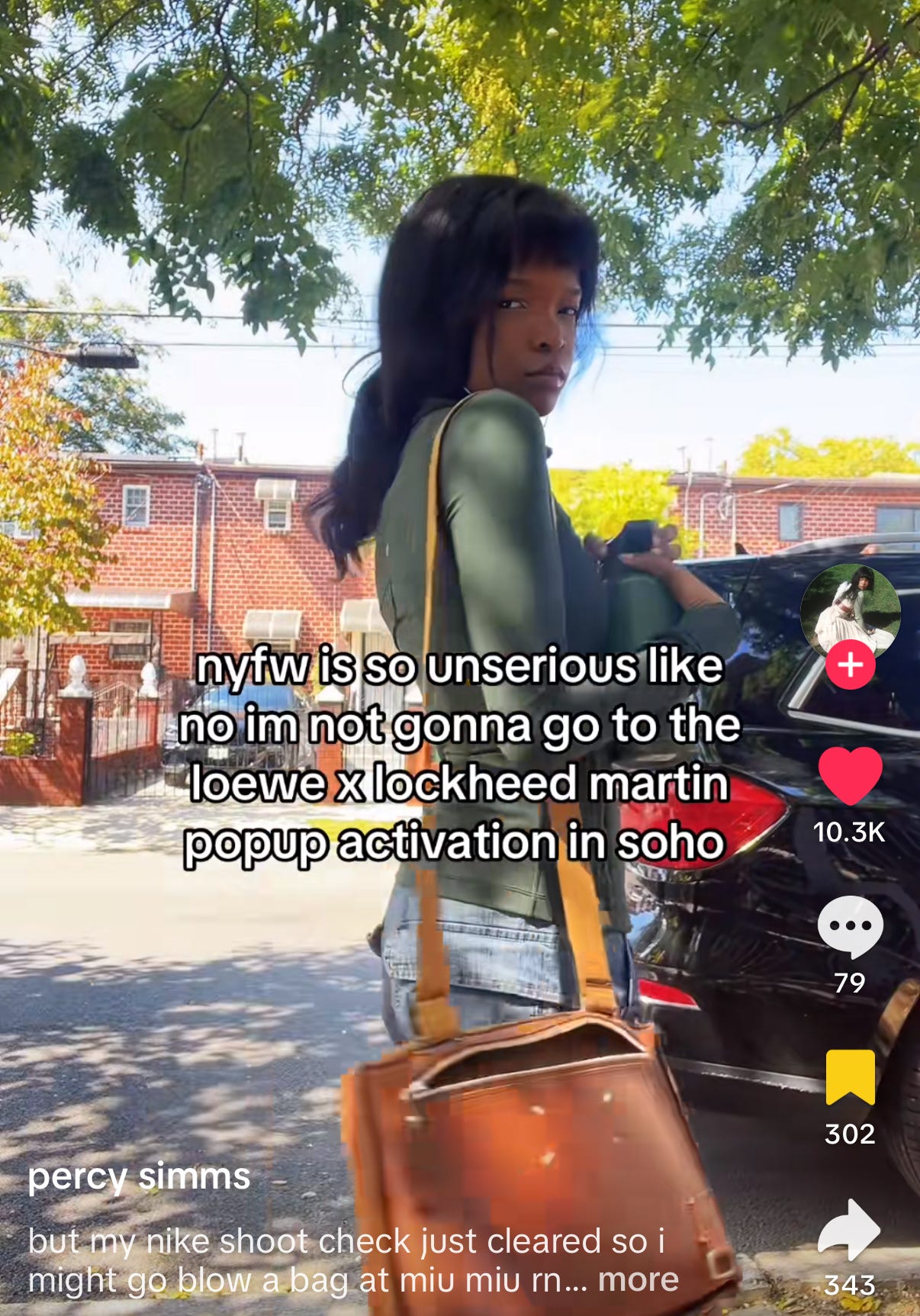
During fashion month, I always see an uptick in TikToks and memes about the absurd collaborations and event sponsorships that flood the calendar — increasingly they include nonsensical partnerships between a fashion label and Lockheed Martin or Blackrock or some other company contributing to the war machine. Sure, we’re having some laughs now, but if the Bezos-sponsored Met Gala is a harbinger of things to come, next year’s party (and industry events in general) might be underwritten by an even more sinister figure. Someone’s gotta pay for this stuff, and with the “Tech Gala,” the floodgates have officially opened. We’re probably not too far away from a Loewe x Lockheed Martin pop-up no longer being a meme and becoming an actual reality, so keep a close eye on the sponsorship listings on your invitations this summer.